
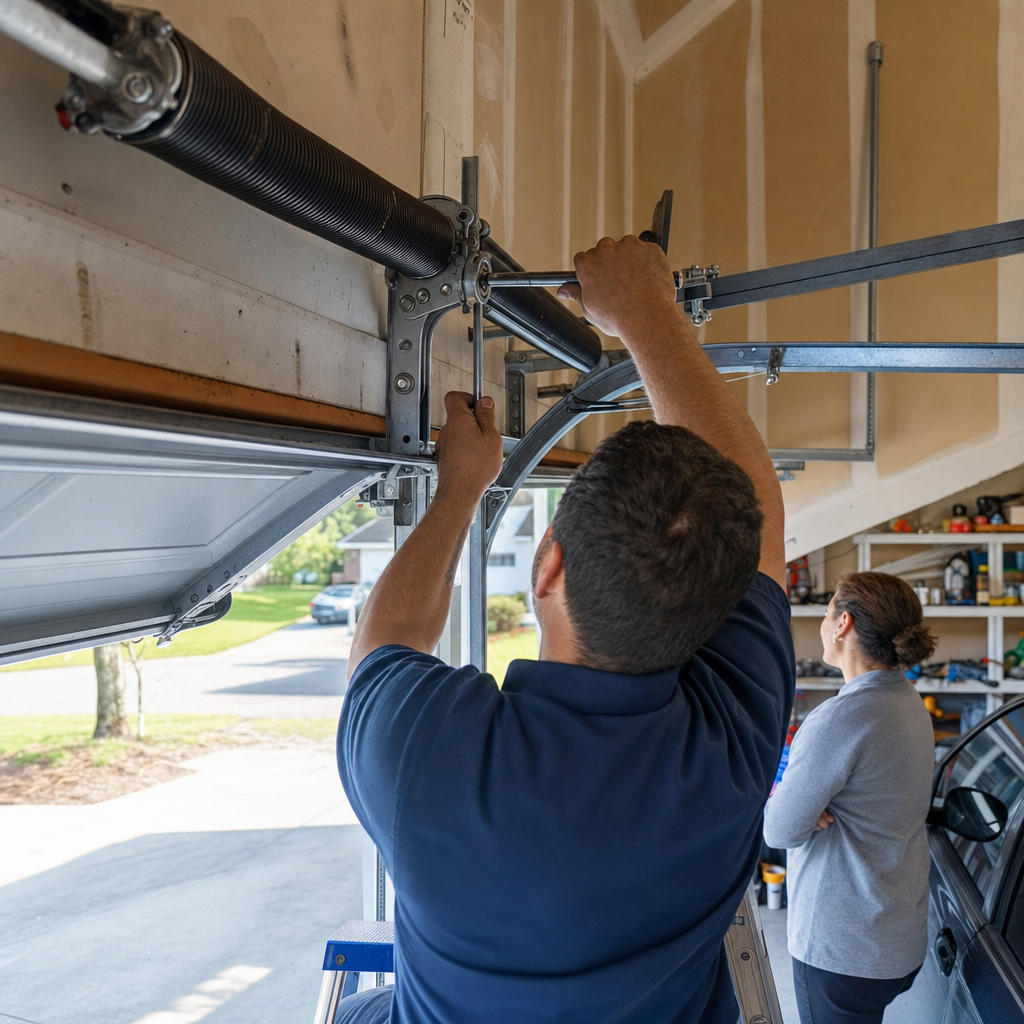
Garage Door Roller Replacement in Virginia, VA — What It Actually Costs and Why the $8 Roller Is Costing You Sleep
Garage door roller replacement in Virginia, VA typically costs $110–$220 for a full set installed, and most jobs finish in under 90 minutes. If your door rattles the walls of your Arlington townhouse or shakes the bedroom floor in your Fairfax County colonial, the problem isn’t your opener — it’s almost certainly the rollers. Call (844) 643-0954 for a free estimate; we’ll check your roller tier, stem diameter, and track condition on the same visit.
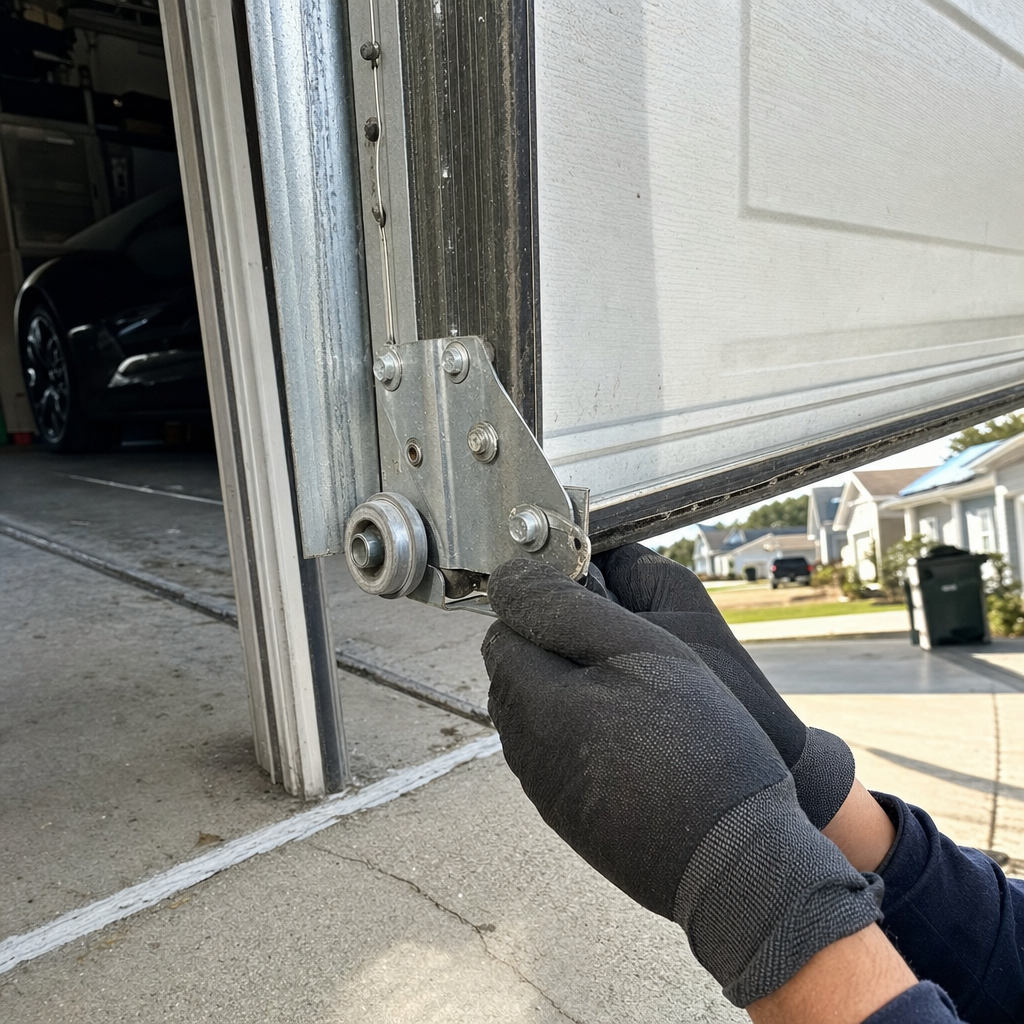
Here’s something we see every week in Virginia: a homeowner calls us because their garage door “sounds like it’s about to fall apart,” and nine times out of ten, they’re still running the same steel rollers that came with the door fifteen years ago. The standard steel roller costs about $8 wholesale. It’s loud, it’s unforgiving, and it’s the reason your teenager’s bedroom above the garage gets a free alarm clock every morning at 6:15 when you leave for work. Edward Campbell, our owner and lead technician, started pointing this out to neighbors eight years ago, and it’s still the most overlooked upgrade in residential garage doors.
We don’t sell roller replacement as a tune-up. We treat it as a precision decision — nylon versus steel, ball-bearing count, stem gauge — because the wrong roller for your door weight and cycle frequency wears out faster, runs louder, and can damage your track. That’s the difference between an owner who shows up with tools and a franchise crew working from a script.
Why Virginia Homes Need to Think Harder About Roller Selection
Virginia’s housing stock tells the story. In the closer-in suburbs — Arlington, Alexandria, Falls Church — you’ve got townhomes and split-levels with living space directly above the garage, wood-framed construction that transmits vibration like a drum. Head west to Loudoun or Prince William County and you’re seeing larger detached homes with heavier doors, often Clopay or Amarr insulated steel, cycling four to six times daily between school runs, gym trips, and home offices.
The $8 standard steel roller has its place: lightweight, non-insulated doors on detached garages that get used twice a day. But it’s completely wrong for a 150-pound insulated door in a Virginia home where the garage sits under a master bedroom. We’ve replaced rollers in Vienna homes where the homeowners genuinely thought the noise was “just how garage doors sound.” After upgrading to 11-ball-bearing nylon, they tell us they can finally sleep through their spouse’s early departure.
Our home page covers our full range of services, but roller work is where we spend the most time educating customers — because the specification matters more than the installation.
The Three Roller Tiers: What You’re Actually Buying
Not all rollers are interchangeable. Here’s what we stock and why we match the tier to your door:
| Roller Type | Cycle Rating | Noise Level | Best For | Installed Price (Full Set) |
|---|---|---|---|---|
| Standard steel | ~10,000 cycles | Loud | Light, rarely used doors | $110–$140 |
| Nylon-coated steel | ~15,000 cycles | Moderate | Standard residential use | $130–$175 |
| 11-ball-bearing nylon | 100,000+ cycles | Near-silent | Heavy/insulated doors, high cycles, living space nearby | $160–$220 |
The cycle rating is the number of open-close operations before failure. A household cycling their door 6 times daily burns through 10,000 cycles in roughly 4.5 years. That’s why we ask about your usage pattern before recommending — a retired couple in McLean with one car and occasional outings faces a completely different wear profile than a family of five in Ashburn with three drivers and a constant stream of activities.
The 11-ball-bearing nylon roller isn’t an upsell. It’s the correct specification for heavy doors and high-frequency use. The ball bearings distribute load across more contact points, reducing friction and eliminating the metal-on-metal rattle that transmits through Virginia’s common wood-frame construction. We’ve measured the difference: a standard steel roller on a Clopay insulated door registers around 85 decibels — comparable to a diesel truck at 50 feet. The same door with 11-ball-bearing nylon drops to roughly 55 decibels, quieter than normal conversation.
Stem Diameter: The Specification Most Installers Skip
Here’s a detail that separates experienced technicians from guesswork: stem diameter compatibility. Not all rollers fit all doors, and forcing the wrong stem into your hinge is a recipe for wobble, premature wear, and eventually an off-track door.
Craftsman doors and older Raynor models — common in Virginia’s 1980s and 1990s housing stock — typically use a 7/16-inch stem gauge. Current production LiftMaster, Clopay, and Amarr doors generally run 1/2-inch stems. The difference is small enough that an inexperienced installer might not catch it, but large enough that a 1/2-inch roller in a 7/16-inch hinge develops play within weeks. We’ve inherited repair calls in Springfield and Annandale where “new rollers” were installed six months prior and the track already shows flat spots from the oscillation.
Edward checks stem diameter before ordering any roller set. It’s a thirty-second measurement that prevents a six-hundred-dollar track replacement. That’s the kind of thing you learn when the owner shows up — not from a training manual, but from eight years of seeing what fails and why.
If you need other components beyond rollers, our Garage Door Parts in Virginia page covers hinges, cables, springs, and full hardware kits.
When to Replace: The Honest Interval Most Companies Won’t Give You
Rollers are the most neglected maintenance item on a garage door. Most Virginia homeowners don’t think about them until one seizes, cracks, or falls out entirely — usually at the worst possible moment, with a car trapped inside or a storm approaching.
Here’s our straight recommendation based on actual usage:
- Standard residential use (2–4 cycles daily): Replace every 5–7 years, or at first sign of grinding, wobble, or visible wear on the roller wheel.
- High-frequency use (6+ cycles daily, multi-driver households): Replace every 3–4 years, and consider upgrading to 11-ball-bearing nylon at the first replacement to extend the next interval.
- After any off-track incident or impact: Inspect immediately. A door that’s come out of its track stresses every roller and hinge; even if they look fine, microscopic cracks in nylon or deformation in steel stems create failure points.
Virginia’s climate accelerates wear in specific ways. Summer humidity swells wood doors and increases friction on the track. Winter temperature swings — we’ve seen single-digit mornings followed by 50-degree afternoons in January — contract and expand metal components, stressing roller stems and bearings. The salt air influence is minimal this far inland, but road salt tracked into garages in Fairfax and Prince William counties can corrode standard steel rollers over time.
We don’t push premature replacement. But we also don’t pretend a ten-year-old roller set on a heavily used door has “a few more years left.” Tell me what it’s doing and I’ll tell you what it needs — no guesswork, no runaround.
What We Check During Every Roller Replacement Visit
A roller job is the right time to inspect what you can’t see from the ground. Edward includes these checks as standard practice, not as an upsell:
- Track flat spots and vertical alignment: Rollers running in damaged track wear unevenly and will fail prematurely regardless of tier.
- Hinge stress fractures: Hairline cracks in the hinge body — especially common on Wayne Dalton and older Genie-compatible doors — propagate under load. Catching one during roller replacement prevents an off-track emergency call six months later.
- Spring balance and cable condition: A door with uneven spring tension overloads specific rollers, concentrating wear on one side of the track.
- Bottom bracket and roller alignment: The bottom roller carries the most load and is most prone to binding if the door isn’t properly balanced.
Eight years, one specialty. We’ve seen enough to know that a $110 roller replacement catches problems that would cost $400–$600 to fix after they fail. That’s not a sales pitch — it’s arithmetic.
Why Virginia Homeowners Choose Regal for Roller Work
We’re not the cheapest option, and we don’t try to be. Here’s what 825 customers reviewed us for:
- The owner shows up. Edward Campbell is lead technician on every job. There’s no rotating crew, no subcontractor guessing at your door’s history.
- Whatever brand you have. We work on Genie, Clopay, Amarr, Wayne Dalton, and the full range of major manufacturers — no turning you away because we don’t stock parts.
- When your door won’t open or close, time matters. Emergency garage door service is core to our business, not an after-hours surcharge.
- Upfront pricing, no padding. The estimate you get is the invoice you pay. We’ve built our reputation on it.
Our training roots run through Northern Virginia Community College’s trades program, where Edward developed the mechanical and electrical fundamentals that still guide diagnostic work today. That background matters when a roller replacement reveals a deeper issue — we identify it correctly the first time.
FAQs
A full set of garage door rollers installed in Virginia costs $110–$220 depending on the roller tier you need. Standard steel sets run $110–$140, nylon-coated steel runs $130–$175, and premium 11-ball-bearing nylon runs $160–$220 for the full set. Call (844) 643-0954 for an exact quote — estimates are free.
Rollers are a replacement-only component — they don’t repair in any meaningful sense. Individual roller replacement costs nearly as much in labor as a full set, so we always recommend replacing all rollers at once for consistent wear and balanced operation. The full-set price is the better value and prevents mismatched wear patterns that stress your track. Call (844) 643-0954 for an exact quote — estimates are free.
Yes, same-day roller replacement is available throughout our Virginia service area for standard door configurations. We stock all three roller tiers and common stem diameters, so most jobs complete in 60–90 minutes. Emergency service is available if a seized or failed roller has trapped your car or left your home unsecured. Call (844) 643-0954 — we’ll confirm availability and give you a window.
Listen for grinding, squealing, or rattling during operation; look for visible cracks in nylon wheels, flat spots on steel wheels, or wobble as the door moves. A door that shakes the walls or transmits vibration into living space above the garage almost always needs roller attention. If your rollers are more than 5 years old on a heavily used door, or if you’ve never had them replaced, inspection is warranted. Call (844) 643-0954 for an exact quote — estimates are free.
Ready for a Quieter Door? Get Your Free Estimate Today
Stop living with a garage door that announces every departure to the neighborhood. Whether you’re in Arlington, Fairfax, Loudoun, or Prince William County, we’ll match the right roller tier to your door weight, usage pattern, and home layout — and we’ll check your track, hinges, and balance while we’re at it. Call (844) 643-0954 now for a free estimate, or fill out our contact form and we’ll confirm your appointment same-day.
Written by Edward Campbell, Owner & Lead Technician at Regal Garage Door Repair Virginia, serving Virginia, VA.